
The Autumn of the White Patriarch
In a new paper, I trace the origins of the present moment in American politics

I’ve just published a new paper called “The Autumn of the White Patriarch: Identity and Inequality in American Capitalism” that you can download here. This is the very brief abstract:
An analysis of income inequality by race and gender sheds light on the transformation of American capitalism since World War II. White men’s share of national income fell from around 73 percent in 1960 to 41 percent in 2023. Furthermore, income inequality among white men increased after a greater education premium ended the postwar era of relative egalitarianism. The origins of contemporary identity politics can be reinterpreted within this context.
In short, I have tried to make a materialist analysis of the origins of contemporary American identity politics, especially on the right. I am, in other words, trying to explain the origins of this:

“Why is the United States now run by a bunch of dumb wannabe white patriarchs?” is the question I have asked. In a single figure, this is my answer:
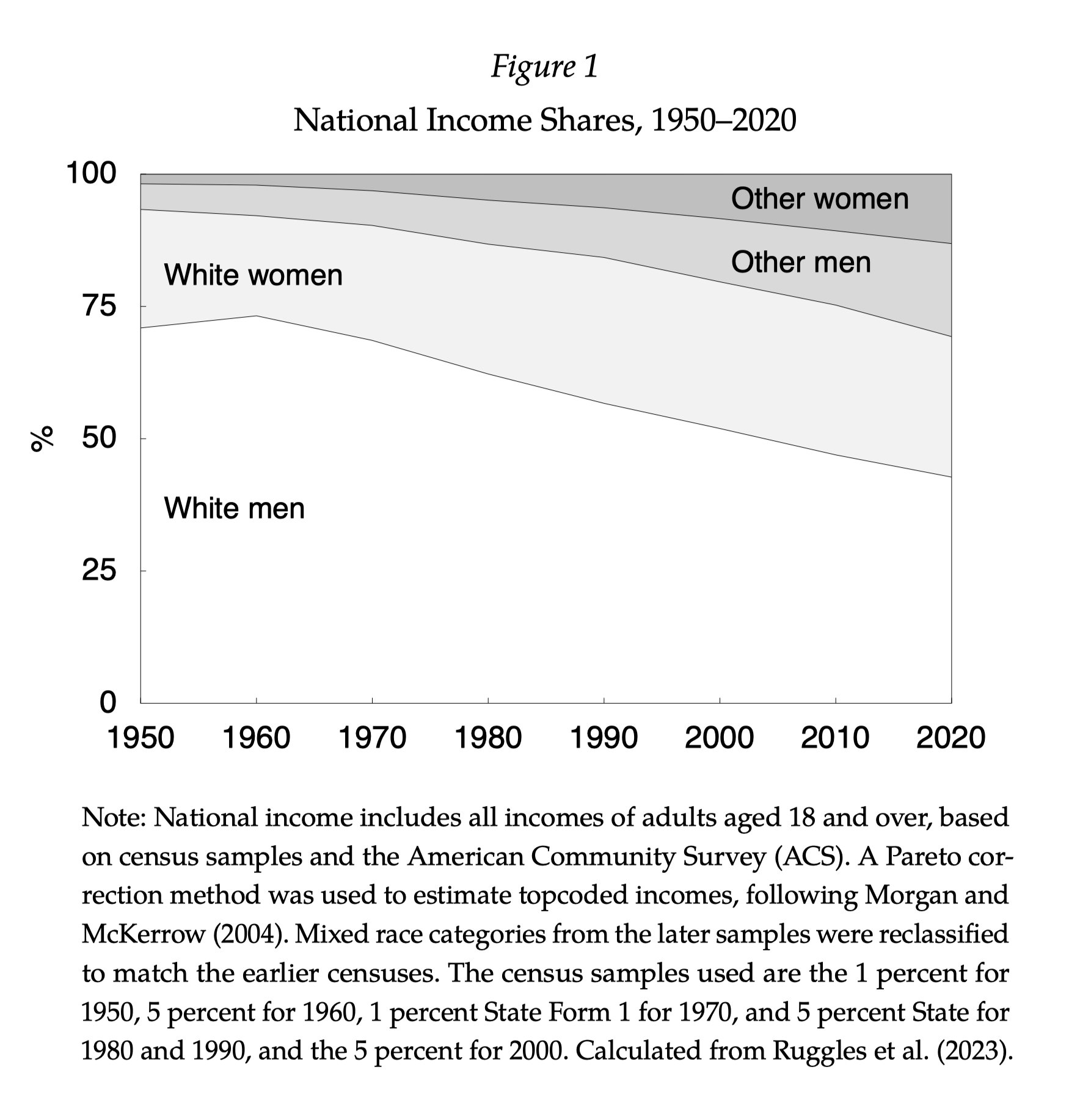
In a nutshell, white men have experienced a historic loss of position in the American class structure, and they are angry about it, not least because the “woke” party—the blessed Democrats—can offer them little, given its subservience to Wall Street and the donor class. The result has been a rightward shift among working class white men, leading to the emergence of the dumb wannabe white patriarchs. In less flippant terms, I explain how this happened in the paper.
My most controversial finding will probably be that the big increase in inequality is really for white men, rather than all Americans:
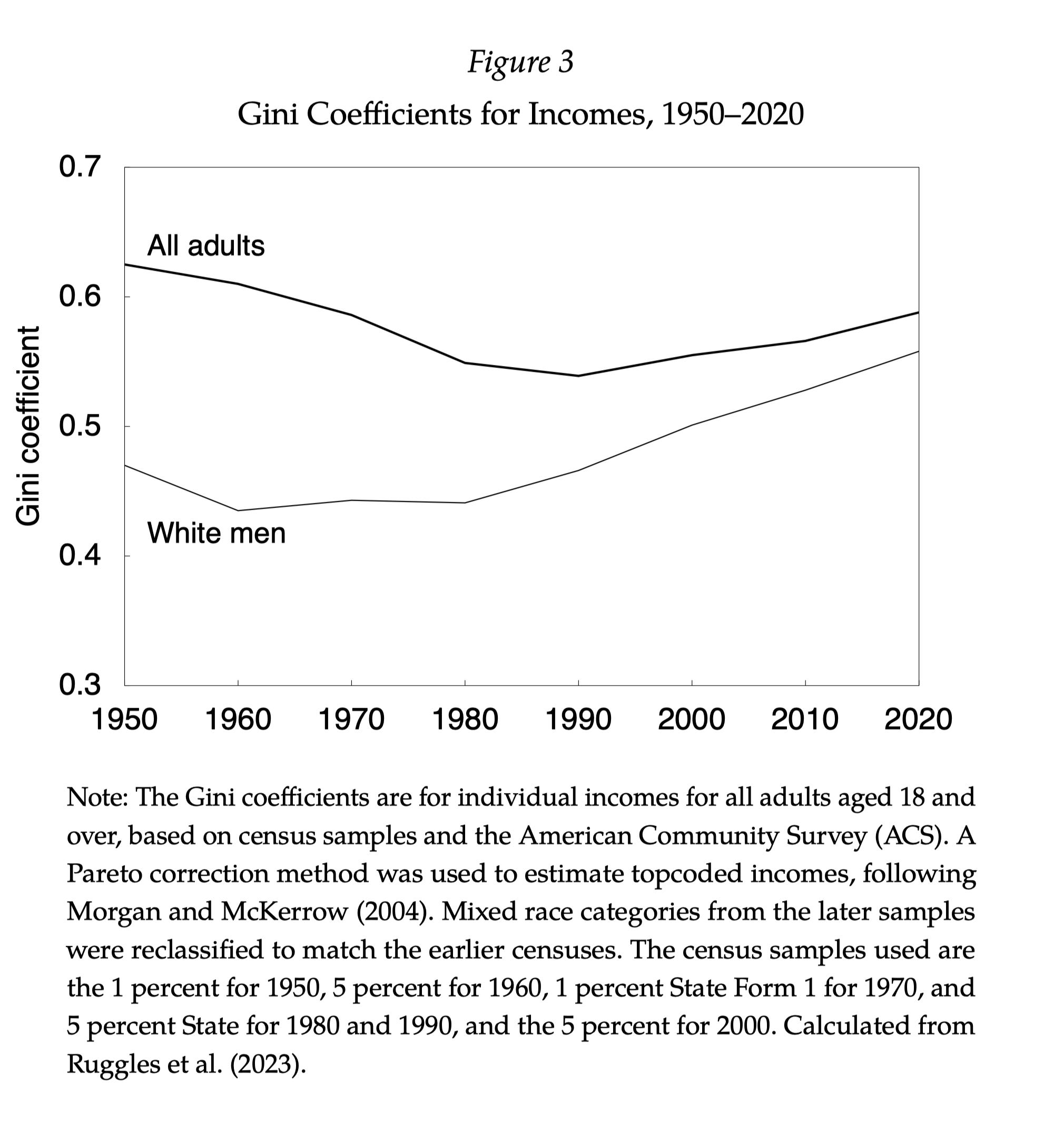
Please do read the paper and let me know what you think. It is front-loaded with econometrics, but you do not really need to understand them to follow my analysis. Don’t be put off! After the numbers, there is a lot of historical narrative, but I have confined technical discussion—including one or two comments on Thomas Piketty’s work—to the footnotes.
All and any comments below are welcome. I have also set up pages for them on Medium and Github. Your feedback will be especially welcome.
Please do read it and let me know what you think.
If you like the paper, you can help me to write more:
And you can subscribe if you haven‘t already: